

Office Furniture Recycling vs. Reuse
Every year, UK businesses generate hundreds of thousands of tonnes of unwanted office furniture. When companies plan a clearance, most type “office furniture recycling” into their search engine, expecting that breaking down desks and chairs into raw materials is the most responsible option available.
Recycling is good. But reuse is significantly better. Reusing intact furniture avoids the embedded carbon of manufacturing new items and delivers up to six times greater carbon savings than recycling alone. In 2024, with ESG reporting now central to corporate strategy and Scope 3 emissions under scrutiny, the difference between recycling and reuse matters more than ever.
Waste to Wonder Worldwide is a UK-based social enterprise that starts where typical recycling services stop. Rather than shredding quality office furniture into raw materials, we prioritise redistribution to schools, charities and community projects in the UK and around the world. This article will help facilities managers, office managers and ESG leaders understand the difference between traditional recycling-only clearances and a reuse-first, circular approach that creates measurable environmental and social impact.

What Is Office Furniture Recycling? (And Why It’s No Longer Enough)
Office furniture recycling involves breaking down decommissioned items,desks, chairs, filing cabinets, partitions—into their component materials: metal, wood, plastics and fabrics. These materials are then processed, shredded, melted or chipped for reintroduction into manufacturing cycles.
The typical outcome of a recycling-only clearance looks like this: steel desk frames go to metal recyclers, wooden panels become particleboard or mulch, plastics are sorted by type for reprocessing, and non-recyclable residuals often end up in energy-from-waste facilities or landfill. While this approach diverts waste from landfill, it still carries a significant carbon cost. Processing materials requires energy, transport and new manufacturing, meaning recycled office furniture has already lost most of its original value.
The scale of the problem is substantial. UK offices contribute to millions of tonnes of commercial waste annually, with estimates suggesting only 20-30% of office furniture is effectively recycled nationwide. Much of what could be reused ends up shredded, incinerated or exported for low-quality processing.
Recycling = last resort. Reuse = first choice.
When you reuse a desk, chair or storage unit, you keep it intact and in use for another five to ten years. That dramatically reduces the embedded carbon waste compared with breaking it down and starting again. For businesses serious about reducing their environmental impact, the distinction between recycling and reuse is the difference between ticking a box and making a real difference.
Why Reuse First? Environmental Impact, Carbon Savings and ESG
The waste hierarchy is clear: reuse sits above recycling, which sits above energy recovery, which sits above landfill. Reusing office furniture is the highest-value environmental outcome because it retains 100% of the material value and avoids the emissions associated with manufacturing and transporting new furniture.
Consider a single workstation: one desk, one task chair, one pedestal. Manufacturing and delivering a new set generates significant carbon emissions from raw material extraction, production, finishing and logistics. When you reuse an existing workstation instead, those emissions are entirely avoided. Waste to Wonder’s impact reporting shows that reuse is up to six times more carbon efficient than recycling alone, because you’re not just diverting waste, you’re avoiding new production entirely.
On large office clearance projects, Waste to Wonder typically achieves around 97% reuse and recycling combined, with reuse as the main focus. This means the vast majority of your surplus furniture continues its working life in schools, charities and community spaces rather than being processed into raw materials.
The ESG relevance is immediate and measurable:
-
Scope 3 emissions reduction: reuse avoids upstream manufacturing emissions that would otherwise sit in your supply chain reporting
-
Circular economy alignment: keeping assets in use aligns with EU Circular Economy Action Plan principles and UK sustainability commitments
-
UN Sustainable Development Goals: reuse directly supports SDG 4 (Quality Education), SDG 12 (Responsible Consumption and Production) and SDG 13 (Climate Action)
Clients receive quantified impact data including carbon savings from reuse versus recycling, diversion-from-landfill percentages and narrative social value outcomes. The standard we work to: 97% average diversion, reuse-first, zero-to-landfill.
How an Ethical Office Furniture Recycling & Reuse Clearance Works
Picture a medium to large UK business, 500 to 2,000 staff, planning a relocation or hybrid-working downsizing. The workspace is full of task chairs, sit-stand desks, meeting tables, pedestals, whiteboards and soft seating. A traditional clearance would send much of this to recyclers or waste facilities.
A reuse-first clearance works differently. Waste to Wonder operates across the UK and Europe, supporting multi-site clearances with tight handover deadlines while prioritising intact redistribution over material extraction. Here’s how the process works.
1. Site Survey and Asset Inventory
A qualified project manager visits your office to survey all surplus furniture and equipment. For remote sites, detailed drawings and video walkthroughs allow accurate assessment without travel delays.
The team creates a detailed asset list covering: number and type of desks, chairs, storage units, soft seating, breakout furniture, meeting-room tables, lockers and specialist items. Condition is graded – suitable for school use, requiring specialist refurbishment, or appropriate for materials recycling only, and this grading determines whether items go to reuse or recycling.
In a recent London office clearance of 800 workstations, this survey stage identified that over 90% of items were structurally sound and suitable for direct redistribution, despite cosmetic wear. Only a small percentage required recycling due to damage.
This stage enables a precise, fixed quotation and accurate carbon and social impact projections for your ESG team before any work begins.
2. Planning for Minimal Disruption and Full Compliance
Waste to Wonder works with FM teams, landlords and fit-out partners to schedule clearance around existing operations. That might mean evenings, weekends or staged floor-by-floor clearances to minimise disruption to ongoing business.
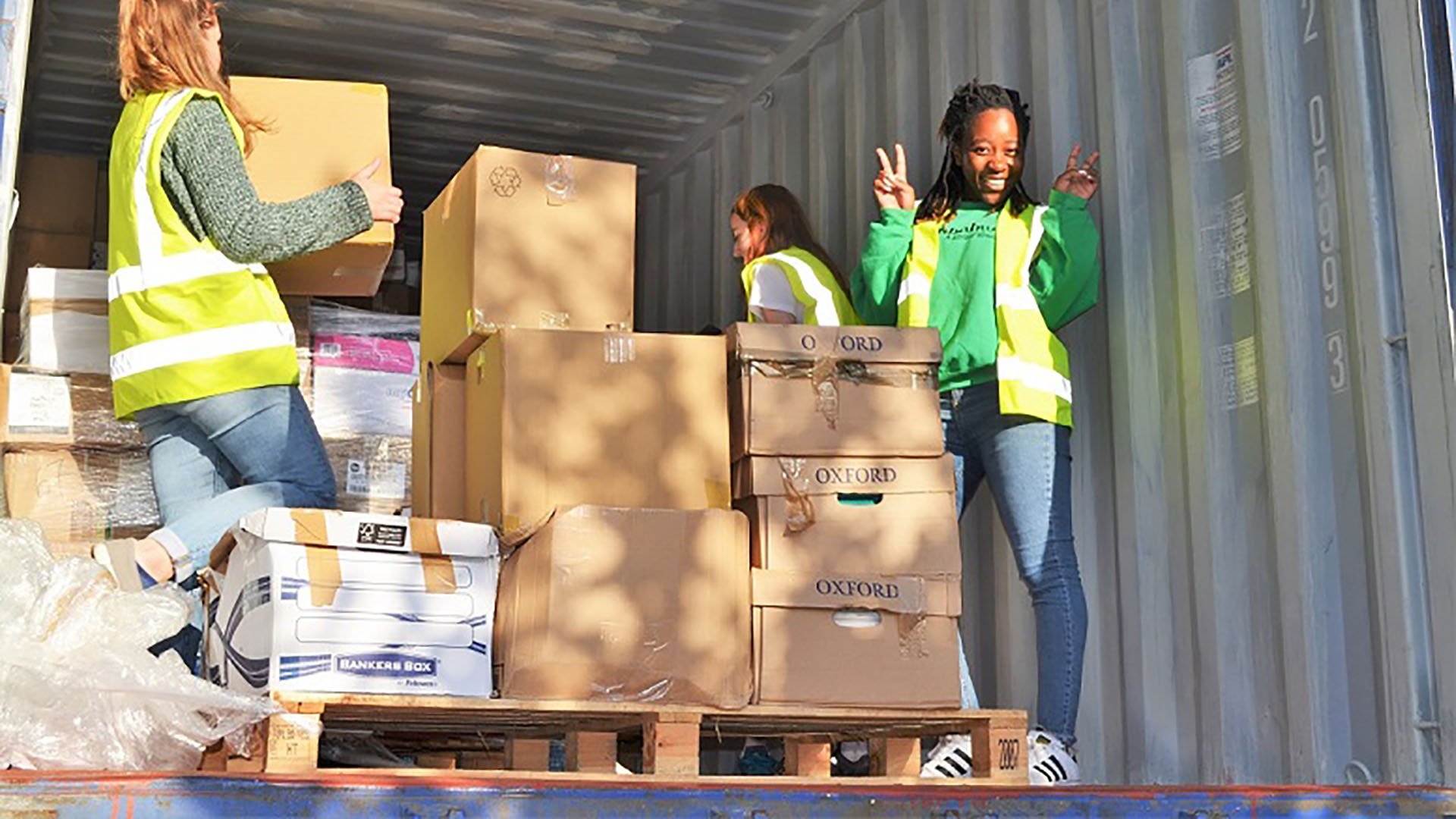
All projects include risk assessments, RAMS and adherence to UK waste and health and safety regulations. Licensed waste carriers handle any non-reusable residual waste. The plan covers logistics for reuse shipments: palletisation, container loading for international charity partners and domestic distribution for UK schools and charities.
Timelines are agreed around key dates such as lease ends, refurbishment start dates or phased hybrid-working rollouts. For facilities and project managers worried about handover deadlines and compliance, this is a hassle free approach designed around your operational reality.
3. Clearance, Reuse, Redistribution and Final Recycling
During the physical clearance phase, trained teams dismantle, label and remove furniture. Items destined for reuse are separated from those requiring materials recycling.
Where do the reused items go? Specific destinations include primary schools in Gambia through School in a Box, vocational colleges in Eastern Europe, UK community hubs, training centres and local charities. Monitor arms, AV stands and server racks can be reused by technical colleges and IT training programmes.
Any items genuinely at end-of-life are sent for responsible recycling through accredited partners, never landfill, and with full traceability throughout the process.
The result on typical projects: around 97% of items reused or recycled, with reuse always prioritised. A cleared London office can furnish real classrooms in Gambia within weeks, turning what would have been waste into educational infrastructure.

From Recycling to Reuse: Social Impact Through School in a Box
Most recycling companies stop at “we diverted waste from landfill.” Waste to Wonder continues the story into classrooms and communities.
The School in a Box programme transforms surplus UK office desks, chairs and storage units into fully furnished schools overseas. A typical shipment includes classroom desks, teacher desks, storage cupboards, whiteboards, shelving and library furniture, everything needed to equip learning spaces where children previously sat on floors or shared single desks between several pupils.
In 2023, furniture from decommissioned London offices equipped multiple schools in Ghana, directly benefiting hundreds of pupils who now learn at proper desks. Complementary projects like the Sustainability Cookery School in Gambia and borewell projects show how furniture reuse supports broader community infrastructure, from education to vocational training to clean water access.
The furniture your team used every day becomes the furniture where children learn to read, write and build futures. Reuse creates genuine positive impact that recycling alone cannot match.
Real Outcomes for Clients and Communities
When a UK bank, government department or technology company chooses reuse-first clearance, they can link their office clearance directly to education and community outcomes.
Waste to Wonder shares impact stories back to clients: photos of furnished classrooms, feedback from teachers and pupil numbers now learning at proper desks rather than on floors. A 2022 clearance of 1,200 workstations from a Manchester headquarters supported multiple schools and benefited over 800 pupils in West Africa.
These stories become powerful content for annual reports, ESG disclosures, internal employee communications and stakeholder presentations. Your delivery staff helped move those desks; now those same desks are helping children learn. That connection matters to employees, stakeholders and customers alike.
What You Receive: ESG Reporting, Carbon Savings and Donation Certificates
Choosing reuse-first office furniture recycling with Waste to Wonder delivers measurable outputs for your sustainability and finance teams.
The ESG report includes:
|
Report Element |
What You Receive |
|---|---|
|
Total items cleared |
Full inventory breakdown by category |
|
Reuse vs recycling proportion |
Percentage breakdown showing reuse prioritisation |
|
Carbon savings |
Quantified avoided emissions from reuse vs new manufacture |
|
Diversion from landfill |
Percentage (typically 97%+) |
|
Social value narrative |
Where items went, which charities and schools benefited |
|
Traceability |
Exact destinations and partner organisations |
The “up to six times carbon neutral” figure reflects avoided emissions: when you reuse furniture rather than recycling materials and manufacturing new items, you avoid the full lifecycle emissions of new production. This creates significantly greater carbon savings than recycling alone delivers.
Clients also receive a Certificate of Donation confirming the fair market value of donated items. This supports social value accounting, internal ESG recognition and can be referenced in tender responses.
Reports align with modern ESG frameworks and can be used in CSR reports, SECR and TCFD-style climate disclosures, and tender responses referencing circular economy and social value commitments. Full traceability means you know exactly where your furniture went and which communities benefited.

What Office Furniture Can Be Reused or Recycled?
Most standard office furniture can either be reused directly or responsibly recycled. Even large, complex estates typically yield high reuse rates with the right approach.
Items suitable for direct reuse include: operator chairs, meeting chairs, height-adjustable desks, bench desks, storage units, cupboards, pedestals, lockers, conference tables, meeting room furniture, reception seating, breakout furniture, canteen tables and chairs, and library shelving.
Specialist items like reception counters, training room furniture, lab benches and workshop equipment can be reused by vocational colleges or specialist charities where appropriate. A boardroom table too large for a school might find new life in a community centre or training facility.
Damaged or non-compliant items, broken chairs, fire-damaged soft seating, items with structural failures, are dismantled so that metal frames, wood panels and suitable plastics can be recycled through accredited partners. Nothing usable is wasted; nothing recyclable goes to landfill.
IT equipment is handled via secure, WEEE-compliant partners offering secure data destruction certificates. Waste to Wonder focuses on furniture and associated equipment, ensuring the complete clearance process maintains compliance throughout.
Unusual and High-Volume Items
Large or unusual items often have more reuse value than clients expect. Boardroom tables, storage walls, archive shelving, compactus units, lab stools and lecterns can find homes in universities, colleges and training centres across the UK and overseas.
Very high-volume items, thousands of matching task chairs from a single headquarters, for example, can be distributed across multiple schools and charities domestically and internationally. The extensive range of Waste to Wonder’s charity partnerships means items find appropriate homes regardless of quantity.
Don’t assume older or branded furniture has no reuse value. High quality office furniture from established manufacturers often has decades of useful life remaining. Reupholstery, cleaning and minor repair can extend the life of items that are structurally sound but cosmetically worn, far more cost effective and environmentally beneficial than recycling and replacing.
Choosing an Ethical Office Furniture Recycling Partner
Not all “recycling” or “clearance” services deliver equal outcomes. In 2026, FM and procurement teams should look beyond headline claims to understand what actually happens to cleared furniture.
What to look for:
-
Reuse-first policies: Does the provider prioritise keeping furniture intact and in use, or default to material extraction?
-
Zero-to-landfill commitment: Can they commit in writing, with evidence from recent projects?
-
Transparent reporting: Will you receive detailed data on reuse percentages, carbon savings and destinations?
-
Charity partnerships: Who are their redistribution partners? Can they name specific schools and charities supported?
-
Social impact evidence: Case studies, impact reports, photos and testimonials from beneficiary organisations
Scrutinise how much material is genuinely reused versus shredded, incinerated or exported for low-quality processing. A company claiming 95% “diversion” might be sending most items to energy-from-waste facilities rather than genuine reuse.
Waste to Wonder differentiates from brokers and standard waste hauliers by operating a redistribution model with established charity networks and schools. The furniture doesn’t disappear into anonymous processing facilities, it arrives in classrooms with photos and videos to prove it.
Tender documents and RFQs now routinely include circular economy and social value criteria. Choosing a reuse-first partner strengthens bids and demonstrates strong commitment to sustainability beyond compliance minimums.
Questions to Ask Before You Book a Clearance
When evaluating potential partners, ask specific questions that reveal actual practice rather than marketing claims:
-
“What percentage of items from recent projects were genuinely reused – not recycled, reused?”
-
“Which specific schools or charities did you support in the last 12 months?”
-
“Can we see a sample ESG report from a comparable clearance?”
-
“Will you commit in writing to zero landfill where infrastructure allows?”
-
“Can you provide full traceability showing exactly where our furniture ends up?”
Check that the provider offers proper compliance: licensed waste carriers, appropriate insurance, experience with large multi-floor urban clearances and regional sites. For any IT-adjacent items, confirm secure data destruction certificates and WEEE compliance.
The difference between a great service and a mediocre one often becomes clear in the answers to these questions. Expert support means transparency, traceability and genuine outcomes, not vague claims about environmental credentials.
Partner With Waste to Wonder Worldwide for Reuse-First Office Furniture Recycling
While most people search for “office furniture recycling,” the most sustainable option is a reuse-first, redistribution-led service that keeps furniture intact and working.
Working with Waste to Wonder delivers:
-
97% average reuse rate
-
Zero-to-landfill approach
-
Measurable carbon savings – up to six times carbon neutral compared with recycling alone
-
Detailed ESG reporting with full traceability
-
Global social impact through School in a Box and complementary programmes
-
Donation certificates confirming fair market value for social value accounting
-
Efficient, compliant clearance with minimal disruption to your operations
Waste to Wonder operates across the UK and supports European projects, handling everything from single-floor office clearances to multi-building corporate campus decommissions. Whether you’re relocating to new premises, downsizing for hybrid working or decommissioning an entire site, the process is designed to be efficient and deliver amazing service at every stage.
Contact Waste to Wonder for a free quote, a site survey or to see anonymised example impact reports. Turn upcoming relocations, refurbishments and hybrid downsizing projects into high-impact reuse stories rather than simple recycling jobs. Your unwanted furniture has value—let’s make sure that value reaches the people who need it most.