

International Women’s Day: A Global Movement for Gender Equality
Every year, International Women’s Day brings together a global movement calling for progress on gender equality, women’s rights and equal opportunities.
Led in part by the United Nations and championed by UN Women, International Women’s Day is more than a moment of celebration. It is a call to action rooted in decades of outcome documents, review conferences and global agreements designed to achieve gender equality and strengthen sound policies across countries.
Yet while there has been global progress, gender parity remains out of reach in many parts of the world.
Across public and private spheres, women and girls continue to face discrimination, legal barriers and limited decision making power. In too many countries, men hold worldwide positions of political and economic dominance, while women remain underrepresented in parliamentary seats, boardrooms and senior leadership.
The United Nations Secretary General has repeatedly highlighted that progress is fragile. Legal gaps remain. Enforceable legislation is inconsistent. National laws often fail to secure rights in practice.
International Women’s Day exists to raise awareness — but also to drive measurable progress.
And in the world of Social Enterprise UK, we see that progress happening every single day.
Why Gender Equality Is Essential for Sustainable Development
Gender equality is not a “women’s issue.” It is foundational to sustainable development.
The Sustainable Development Goals are clear: without equal access to economic resources, education, agricultural land, natural resources and enabling technology, sustainable development cannot succeed.
When women have equal rights to:
-
Economic resources
-
Communications technology
-
Public services
-
Education
-
Leadership and decision makers roles
Entire communities benefit.
Research consistently shows that when women control household income, poverty reduces. When young women complete education, child marriage declines. When women participate in business and leadership, innovation accelerates.
Yet gender inequality continues to restrict access to:
-
Equal opportunities
-
Social protection policies
-
Decision making power
-
Effective participation in political and economic life
Unpaid care and domestic work disproportionately falls to women. Domestic and care work, often invisible in public policy, limits career progression and economic security.
To truly achieve gender equality, countries must undertake reforms, strengthen sound policies and close legal gaps that prevent women equal rights in both public and private spheres.
And this is where social enterprise plays a powerful role.

Gender Inequality Today: The Legal and Social Barriers Women and Girls Still Face
While global progress has been made, millions of women and girls continue to face harmful practices and discrimination.
Across parts of Sub Saharan Africa and Southern Asia, child marriage and forced marriage remain realities. Millions have undergone female genital mutilation, a violation of sexual and reproductive health and reproductive rights.
Sexual and other types of violence continue to affect women worldwide. Legal barriers and weak enforceable legislation often prevent access to equal justice.
Universal access to sexual and reproductive health services remains uneven. In many countries, legal rights exist on paper but are not protected in practice.
Gender inequality is not confined to one region or income bracket. It affects decision makers in business. It affects young women entering the workforce. It affects girls’ access to education.
The World Bank and UN Women continue to call for stronger national laws, secure rights and policy reforms that create equal opportunities across public and private spheres.
But legislation alone is not enough.
Cultural norms, discrimination and structural inequality require leadership, and that leadership is increasingly emerging from social enterprise.
Women in Social Enterprise: Leadership That Creates Positive Impact
At Waste to Wonder Worldwide, this International Women’s Day we chose to spotlight incredible women leading change across Social Enterprises.
We interviewed:
-
Hannah Routledge, Contracts and Partnerships Manager at Hey Girls
-
Karis Gill, Co-Founder of Social Stories Club
-
Birgit Kehrer, Founder and CEO of ChangeKitchen CIC
-
Camilla Marcus Dew, Co-Founder at Amplify Goods
-
Kali Hamerton Stove, Founder and Director at The Glasshouse
-
Hayley Smith, Charity Partnerships Manager at Waste to Wonder Worldwide
-
Linda Glover, Project and Compliance Manager at Waste to Wonder Worldwide
-
Val Harris, Admin Manager at Waste to Wonder Worldwide
Each woman represents leadership in action.
From tackling period poverty and advocating for sexual and reproductive health, to creating sustainable business models that support women’s empowerment, to embedding ethical compliance and social protection policies into everyday operations, these leaders are creating measurable progress.
In the UK alone, social enterprises contribute billions to the economy while prioritising social and environmental impact. Women-led social enterprises are at the forefront of this movement.
They are:
-
Driving sustainable development
-
Challenging discrimination
-
Creating equal opportunities in business
-
Supporting young women into education and employment
-
Building models that reduce poverty
-
Ensuring effective participation in leadership
They are not waiting for policy reform, they are building solutions.
This is gender equality in practice.
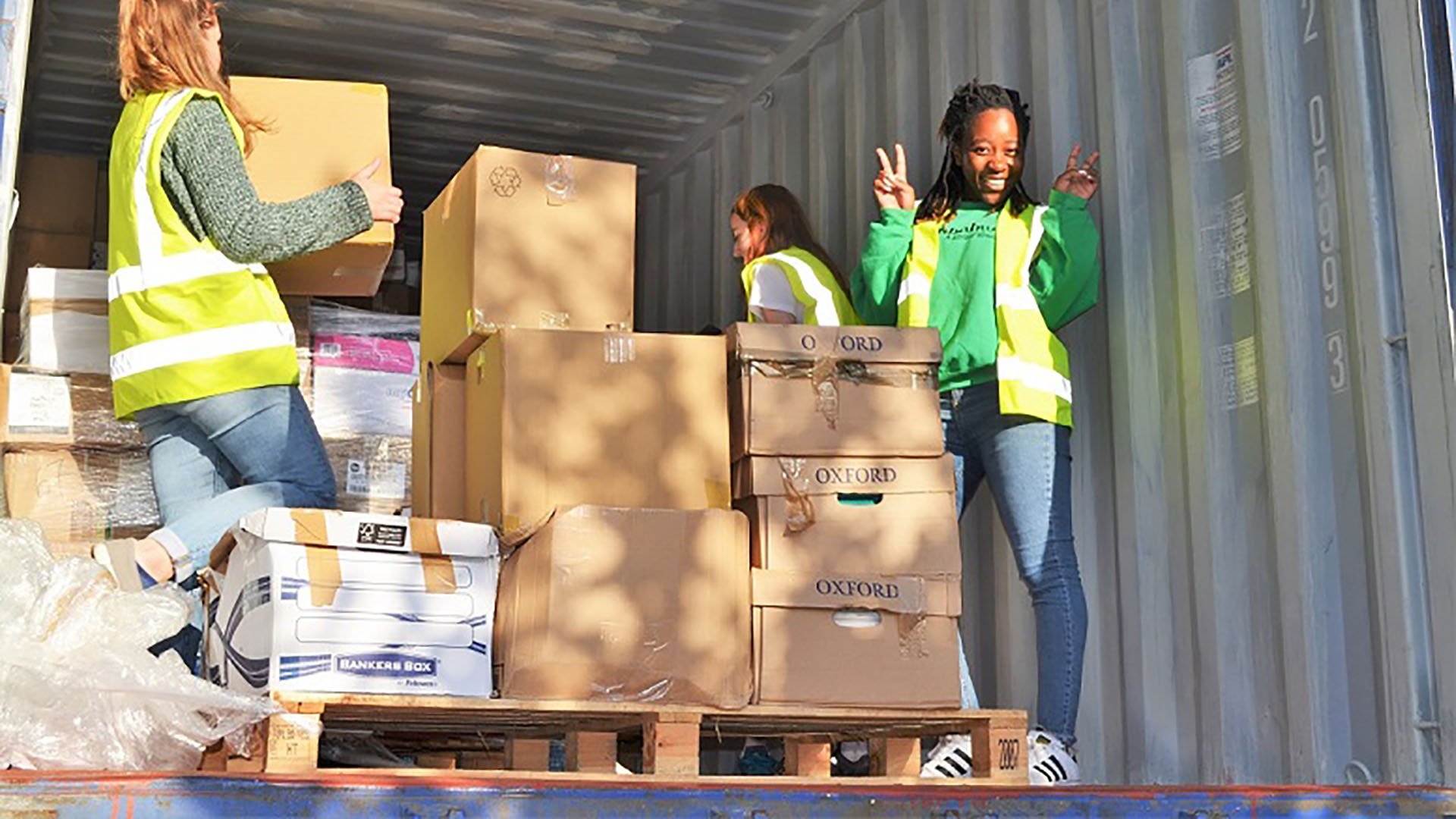
Women in Leadership, Millions of Girls Watching
When we reflect on International Women’s Day, it is easy to focus on global frameworks and high-level policy.
But change often begins with five young women in a classroom. Or a female founder launching a purpose-led business. Or a contracts manager raising awareness about menstrual equity. Or a project manager ensuring compliance and equal rights within operational systems.
The ripple effect matters.
When girls see women in leadership, decision maker roles feel accessible. When women are visible in business, parliamentary seats and boardrooms no longer feel out of reach.
This is about shared responsibility.
Governments must undertake reforms. Countries must strengthen sound policies. National laws must close legal gaps.
But business also has a role.
In both public and private spheres, organisations must examine how they:
-
Support equal opportunities
-
Address unpaid care assumptions
-
Promote women’s empowerment
-
Ensure fair access to economic resources
-
Champion equal justice
Social enterprise demonstrates that business can be a vehicle for global progress.
From Awareness to Action: Turning International Women’s Day Into Real Progress
International Women’s Day is powerful because it raises awareness.
But awareness without action changes nothing.
To achieve gender parity, we need:
-
Secure rights backed by enforceable legislation
-
Universal access to reproductive health services
-
Equal access to education
-
Equal pay for same jobs
-
Leadership representation at all levels
-
Social protection policies that recognise unpaid care
We also need business leaders willing to use their platforms to create positive impact.
At Waste to Wonder Worldwide, we believe sustainable development is not just environmental. It is social.
It is about:
-
Supporting women and girls through education initiatives
-
Redistributing resources to reduce poverty
-
Creating leadership opportunities within our own organisation
-
Partnering with women-led social enterprises
-
Embedding gender equality into ESG strategy
International Women’s Day reminds us that progress is possible, but not inevitable.
Gender equality requires commitment.
It requires leadership.
It requires women and men working together.
It requires decision makers who understand that empowering women strengthens communities, economies and the world.
This year, through our interviews with inspiring leaders across Social Enterprise UK, we are reminded that change is already happening.
Women are leading.
Women are building sustainable businesses.
Women are driving innovation.
Women are strengthening communities.
And when women thrive, sustainable development accelerates.
International Women’s Day is not just a celebration.
It is a reminder of what is possible when equal rights become reality.
Let’s continue to raise awareness.
Let’s continue to support women’s empowerment.
Let’s continue to build a global movement where gender equality is not aspirational, but achieved.
