

When UK and European businesses plan office moves, refurbishments or closures, the first instinct is often to search for “office furniture recycling.” It feels like the responsible choice, keeping materials out of landfill and contributing to a circular economy. Yet recycling, while better than disposal, is actually the last resort in a genuinely circular model.
Reuse is more carbon-efficient than recycling. When a desk or chair continues its working life rather than being broken down into raw materials, no energy-intensive processing is required and no new item needs to be manufactured. The carbon savings are substantial, around six times greater than recycling alone.
Waste to Wonder Worldwide is a social enterprise specialising in ethical office clearances and global redistribution of surplus office furniture. This article guides facilities, workplace and ESG teams through practical, compliant and high-impact options that go well beyond basic recycling.
What Does “Office Furniture Recycling” Actually Mean?
Office furniture recycling means separating desks, chairs, filing cabinets, storage units and soft seating into their constituent materials, wood, metal, plastic and textiles, for recovery and reprocessing.
The typical process used by waste carriers and recyclers follows a standard path:
-
Collection from the premises
-
Sorting by material type at a processing facility
-
Shredding, baling or breaking down components
-
Sending materials to specialist plants across the UK and Europe
UK businesses have legal obligations under waste regulations when clearing commercial offices. Duty of care requirements apply, Waste Transfer Notes must accompany all movements, and IT equipment or electrical items fall under WEEE regulations requiring authorised handlers.
The critical distinction is this: recycling still destroys the object. A perfectly functional chair gets shredded for its steel and foam. The process uses significant energy, melting steel alone requires around 5-10 GJ per ton. Reuse, by contrast, keeps items intact and useful without any of that processing.
Why Reuse Beats Recycling: 6x Carbon Savings
Reusing a workstation, task chair or storage cabinet typically delivers around six times the carbon saving of recycling it. No new item needs to be manufactured. No energy-intensive processing is required.
Consider a concrete example: a business clearing 100 operator chairs and 100 standard desks. If recycled, those items are broken down, processed and replaced with new furniture. If reused, they continue working in a school or charity project. The difference in avoided CO2e runs into tonnes per project—embodied carbon that never enters the atmosphere.
Most emissions come from manufacturing and materials, not from the final disposal step. When Waste to Wonder redistributes furniture directly into a school or community project, clients avoid both manufacturing emissions and recycling emissions. That is why reuse delivers such dramatically better outcomes.

Reuse-First Office Furniture Clearance with Waste to Wonder Worldwide
Waste to Wonder operates a reuse-first office clearance model for HQ moves, hybrid downsizing and building decommissioning across the UK and Europe.
Two core pathways serve client needs:
-
Relocation: Moving existing furniture to a client’s new or refurbished office, retaining value within the business
-
Redistribution: Sending surplus items to schools and community projects in the UK and overseas through charity partnerships
The organisation does not operate a landfill-based clearance model. Recycling is treated strictly as a last resort where items are beyond repair or reuse. Clients typically achieve 97% reuse rates per project, transforming what would be waste into continued working assets.
How Our Ethical Office Furniture Reuse Process Works
For facilities or workplace managers planning an office clearance, the journey follows a structured process designed for efficiency and compliance:
1. Site survey and asset inventory: Our team visits to catalogue desks, chairs, storage, meeting furniture, reception pieces, breakout areas, canteen equipment and IT assets
2. Classification: Items are categorised for relocation, local reuse, refurbishment or global redistribution based on condition and suitability
3. Logistics planning: Clearance dates are coordinated with lease events, fit-out timelines or dilapidation works to minimise disruption
4.Safe clearance: Loading and transport to redistribution hubs and charity partners, with items handled carefully to preserve their working life
Items not suitable for reuse are segregated by materials and sent to approved recyclers with full documentation. This maintains a zero to landfill approach while ensuring compliance.
All work coordinates with building management, CDM requirements where relevant, and health and safety standards, particularly important on multi-floor or city-centre sites where access can be challenging.
Global Impact: From Corporate Offices to Classrooms
The School in a Box programme transforms surplus UK office furniture into complete classroom fit-outs in countries where local budgets are extremely limited.
Unwanted office furniture from London headquarters becomes:
-
Desks supporting primary schools in Gambia
-
Chairs equipping vocational training centres in India
-
Storage units furnishing hospitals in Eastern European nations
-
Meeting tables and workstations completing orphanage facilities
Complete classrooms are created from redundant corporate workstations. What one business considers old office furniture becomes essential infrastructure for education.
Additional programmes extend the positive impact further. The Sustainability Cookery School in Gambia will train young people in hospitality skills using repurposed commercial kitchen equipment. Furniture sold generates funds to build Borewell projects to bring clean water to communities. Furniture reuse catalyses broader development, each clearance enables multiple outcomes.

ESG Reporting: Proving Your Carbon and Social Value
Every Waste to Wonder project ends with a detailed ESG impact report, not just a waste transfer note. This full report provides auditable evidence for sustainability teams and stakeholders.
Key metrics included:
-
Item-by-item destination mapping: Which school or charity received which assets, by category and quantity
-
Percentage of furniture reused vs recycled: Clear breakdown of outcomes per project
-
Carbon savings and avoided emissions: Framed to support Scope 3 and Scope 4 discussions with concrete CO2e figures
-
Calculated social impact value: Linked to education hours enabled, community development outcomes and UNSDG contributions
These reports help customers evidence their circular economy performance for annual reports, ESG frameworks and stakeholder communications. This goes beyond typical recycling certificates, giving FM, procurement and sustainability teams the data they need for compliance and reporting.
Compliance: Waste Regulations, WEEE and Zero-Landfill Ambitions
Businesses clearing commercial offices across England, Scotland, Wales and Northern Ireland face several compliance concerns:
-
Duty of care: Legal responsibility for waste streams until properly transferred
-
Record-keeping: Waste Transfer Notes required for all movements
-
WEEE regulations: IT equipment and electrical items require authorised handlers
-
Data security: Secure destruction of drives where relevant
Choosing a reuse-first clearance partner simplifies compliance by reducing waste volumes and providing clear documentation for both reused and recycled items. When unwanted furniture goes directly to a school rather than a processing facility, the paperwork burden decreases.
Waste to Wonder’s model is compatible with corporate zero-landfill commitments. The focus is maximum reuse, then high-quality recycling, avoiding landfill entirely wherever infrastructure permits.
Planning an Ethical Office Furniture Clearance: Practical Steps
A concise planning checklist for facilities managers and project teams:
-
Start early: Begin before lease expiry or fit-out start where possible
-
Create an asset list: Catalogue items by floor and area – desks, chairs, storage, meeting rooms, canteen
-
Identify critical dates: Note lift bookings, loading bay access, security requirements and any constraints
-
Engage early: Contact a reuse-focused partner like Waste to Wonder to design reuse pathways before clearance costs escalate
Align clearance with overall workspace strategy. Hybrid working transitions, refurbishment plans and procurement decisions for new furniture all connect. When these align, clearance becomes cost effective rather than a burden.
Internal communication matters too. Inform staff about the social and environmental benefits of reuse. Knowing their old desk will support organisations like schools overseas builds engagement and pride in the process.
Choosing Between Recycling, Reuse and Resale
Weighing options depends on desired outcomes. Consider what matters most to your business:
|
Pathway |
Best For |
Considerations |
|---|---|---|
|
Internal reuse |
Cost avoidance, speed |
Moving furniture between sites or teams |
|
Professional redistribution |
Carbon impact, social value |
Maximum ESG benefit through charity donation |
|
Resale |
Modest financial return |
No social impact, variable demand |
|
Recycling |
End-of-life items |
Last resort for non-compliant or damaged assets |
While resale can sometimes generate modest funds, donation-led reuse often delivers higher ESG and reputational value, especially when documented with robust reporting. A blended approach works best: maximise internal reuse, then charitable redistribution, then high-quality recycling for the remainder.
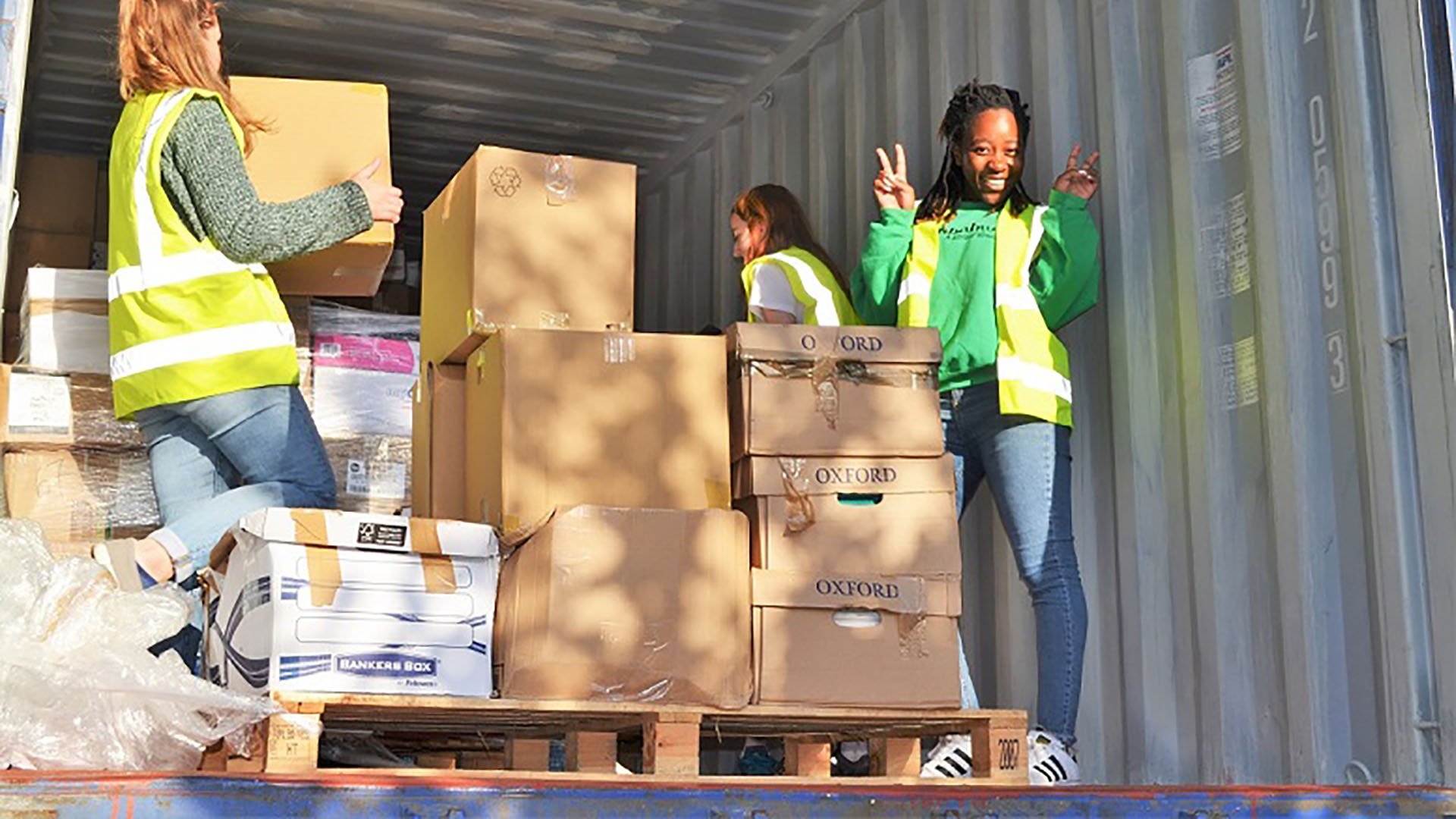
Case Snapshot: Turning a Corporate Clearance into Classrooms
A 500-desk London headquarters was vacated in 2023. The challenge: dispose of office furniture responsibly while meeting tight lease deadlines and demonstrating sustainability commitment.
The approach:
-
Full site survey completed within five days of initial contact
-
Items classified by condition and redistribution potential
-
Clearance carried out floor-by-floor with minimal disruption to remaining operations
The results:
-
92% of items reused or redistributed
-
8% recycled through approved partners
-
Zero landfill
The impact:
-
Three schools fully furnished
-
Estimated 45 tonnes CO2e avoided through reuse vs recycling
-
Social impact value exceeding £180,000 in educational outcomes
-
Full documentation for the client’s annual ESG report
The client received a network of evidence: item tracking, destination mapping, carbon calculations and social value metrics. What began as a clearance problem became a sustainability success story.
Partner with Waste to Wonder for Reuse-First Office Furniture Recycling
Recycling is good. Structured reuse of office furniture is better, for carbon, cost and community impact.
Waste to Wonder Worldwide operates as a circular workplace partner, not simply a waste carrier or recycler. The organisation supports workplace change, decommissioning and hybrid transitions with a model designed for maximum reuse and measurable outcomes.
For FM teams, CRE stakeholders, fit-out providers and ESG leads planning upcoming relocations, refurbishments or closures, collaboration begins with a simple conversation.
Explore how we can support your next project:
When workplaces change, the furniture within them can either become waste or continue its working life in a school, hospital or community project. The choice shapes outcomes for climate, for business and for the communities that benefit. Contact our team to explore what is possible.
